

Stretch Ceiling or Kenaf (Drywall): Which is the Better Choice?
When it comes to interior design, the ceiling is often referred to as the “fifth wall,” a vast, untapped canvas with the potential to dramatically transform a space. The decision on what material to use can define the entire atmosphere of a room. For decades, the go-to solution has been traditional drywall, often known as Kenaf in some regions. However, a modern, sleek contender has risen in popularity: the stretch ceiling. This brings property owners, designers, and builders to a critical crossroads, constantly debating the merits of Stretch Ceiling or Kenaf. This decision isn’t just about aesthetics; it involves considering installation, durability, maintenance, and long-term value. While many focus on wall coverings like Decorative Wall Panels to add character, the ceiling choice is arguably more fundamental to the overall architectural feel. Understanding the different false ceiling structures is the first step in making an informed choice between these two popular options. This guide will delve deep into the Stretch Ceiling or Kenaf debate, providing a detailed analysis to help you determine which solution is truly the superior choice for your specific needs.
The core of the Stretch Ceiling or Kenaf dilemma lies in their fundamentally different compositions and application methods. One is a marvel of modern polymer technology, while the other is a time-tested construction staple. Choosing incorrectly can lead to budget overruns, maintenance headaches, or a final look that doesn’t match your vision. Therefore, a thorough comparison is not just helpful; it’s essential for a successful project. Throughout this article, we will explore every facet of the Stretch Ceiling or Kenaf comparison, ensuring you have all the information you need.
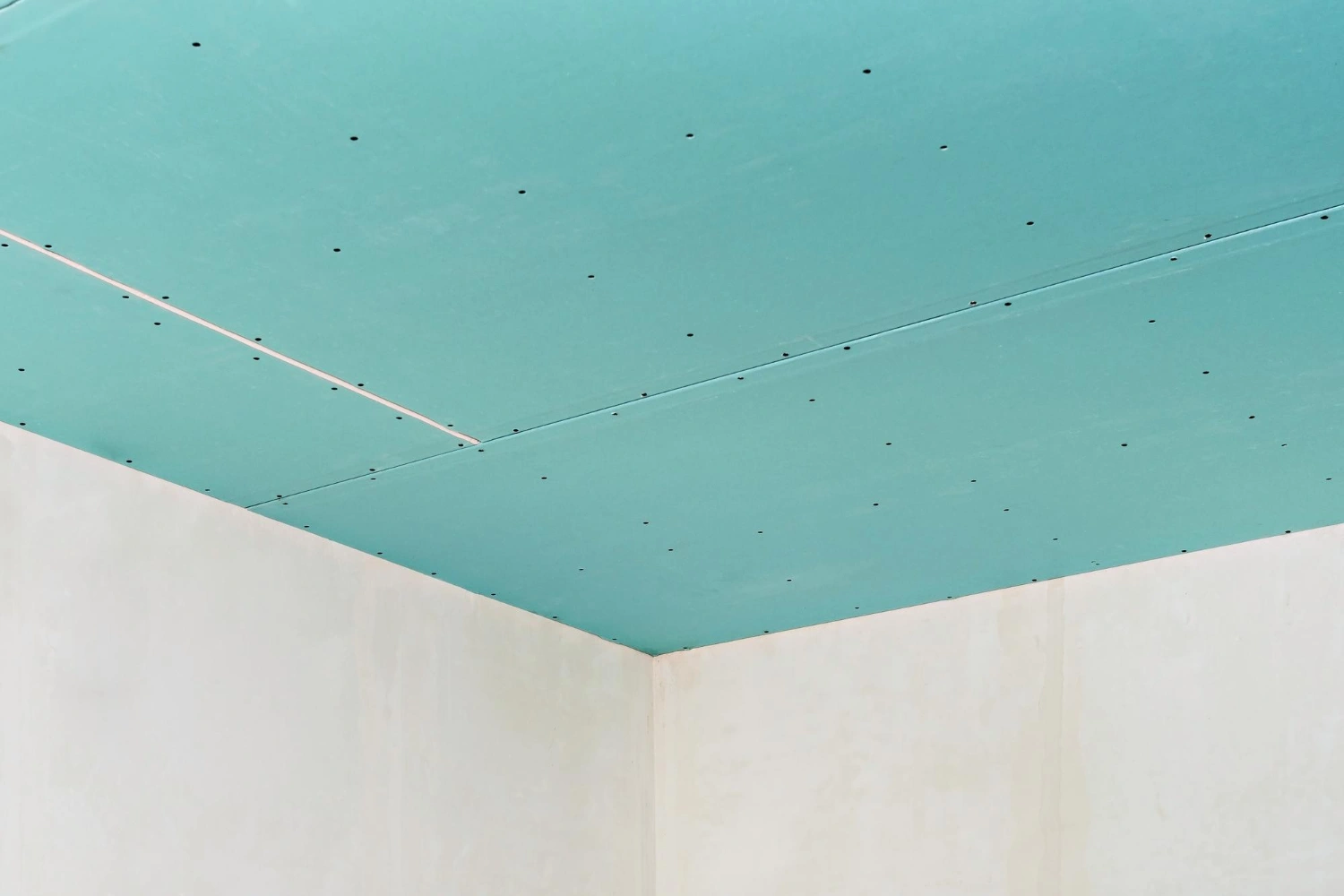
Stretch Ceiling or Kenaf
Key Differences Between Stretch Ceiling or Kenaf
To truly understand which option is better for your project, we must first break down the fundamental differences between these two ceiling systems. The debate over Stretch Ceiling or Kenaf isn’t a simple one, as each material brings a unique set of properties to the table. These differences span from their material makeup to the very way they are installed and maintained over time.
Material Composition: A stretch ceiling is made from a lightweight yet highly durable PVC (Polyvinyl Chloride) film. This film is custom-manufactured to the exact dimensions of the room, with a small margin for stretching. It is held in place by a perimeter track or profile. In contrast, Kenaf, or drywall, consists of gypsum plaster pressed between two thick sheets of paper. These come in standardized panels (e.g., 4×8 feet) that are cut to size on-site. This material difference is the source of many of the subsequent pros and cons in the Stretch Ceiling or Kenaf discussion.
Installation Process: The installation methods could not be more different. The process of Kenaf Installation is a multi-stage, labor-intensive job. It involves building a wooden or metal frame, screwing the heavy gypsum boards to it, taping the seams, applying multiple layers of joint compound (mudding), and extensive sanding to achieve a smooth finish before priming and painting. This process creates a significant amount of dust and can take several days. On the other hand, installing a stretch ceiling is a much cleaner and faster process. A perimeter track is first installed around the room. The PVC membrane is then heated with a portable heater to make it more pliable, and its edges are tucked into the track. As it cools, the material contracts, creating a perfectly taut, flawless surface. The choice of Stretch Ceiling or Kenaf often comes down to project timelines and tolerance for disruption.
Aesthetics and Versatility: Here, the Stretch Ceiling or Kenaf comparison becomes a matter of taste. Kenaf offers a classic, traditional finish. It can be painted any color, and techniques like coffered ceilings or multi-level designs are achievable, though complex. Its primary aesthetic is a flat, solid surface. Stretch ceilings, however, offer a vast array of aesthetic possibilities. They come in over a hundred colors and various finishes, including matte, satin, high-gloss (lacquer), metallic, and even translucent. The high-gloss finish can create a mirror-like effect, making a room feel larger and brighter. Furthermore, stretch ceilings can be printed with any high-resolution image and can be shaped into curves, domes, and other 3D forms that are nearly impossible to achieve with Kenaf. This design flexibility is a major factor in the ongoing Stretch Ceiling or Kenaf debate among architects and designers.
Durability and Maintenance: A key consideration when deciding between Stretch Ceiling or Kenaf is how they will hold up over time. Kenaf is susceptible to cracking due to building settlement and can be easily damaged by water leaks, leading to stains, sagging, and mold growth. It also requires repainting every few years to maintain its appearance. Stretch ceilings are incredibly durable. The PVC membrane is waterproof, protecting the space above from minor leaks. It does not crack, peel, or fade, and its anti-static properties mean it doesn’t collect dust. Cleaning is as simple as wiping it with a damp cloth. This low-maintenance aspect makes a strong case for stretch ceilings in the long-term Stretch Ceiling or Kenaf value proposition.
Advantages of Stretch Ceiling or Kenaf in Modern Design
Modern interior design prioritizes clean lines, minimalism, innovative lighting, and a sense of openness. In this context, the choice of Stretch Ceiling or Kenaf can significantly impact the success of a design concept. Both materials can be adapted for modern aesthetics, but they do so in very different ways. The latest Interior Decoration Trends 1404 often emphasize seamless integration and unique material finishes, pushing the boundaries of what a ceiling can be.
A stretch ceiling is inherently modern. Its perfectly flat, monolithic surface is the epitome of minimalism. The high-gloss variants are particularly effective in contemporary spaces, as they reflect light and create an illusion of greater height and space. Perhaps its most significant advantage is in lighting. Translucent stretch ceilings can be backlit with LED arrays to create a massive, uniform light source that is both functional and breathtakingly beautiful. This turns the entire ceiling into a lighting fixture, a feat that is exceptionally difficult and expensive to replicate with Kenaf. This capability alone makes many modern designers lean towards stretch ceilings when presented with the Stretch Ceiling or Kenaf choice for a high-end project.
However, Kenaf should not be dismissed. Its strength in modern design lies in its architectural potential. With Kenaf, designers can create sharp, geometric drops, floating ceiling effects with cove lighting, and precise recesses for curtain tracks or projection screens. When finished to a high standard (a Level 5 finish), a Kenaf ceiling provides a pristine, neutral backdrop that allows other design elements to shine. The decision between Stretch Ceiling or Kenaf in a modern home often depends on whether the ceiling is meant to be a statement piece (stretch) or a subtle, supporting element (Kenaf).
Disadvantages of Stretch Ceiling or Kenaf for Humid Spaces
The performance of a ceiling material in high-moisture environments like bathrooms, kitchens, indoor pools, and basements is a critical factor. Here, the comparison between Stretch Ceiling or Kenaf becomes much less subjective, with one clear winner emerging.
Kenaf (standard drywall) is notoriously poor in humid conditions. The gypsum core and paper facing absorb moisture, which can lead to sagging, discoloration, and, most worrisomely, the growth of mold and mildew. While moisture-resistant drywall (often called “green board”) exists, it is only resistant, not waterproof, and can still fail under constant high humidity or direct water contact. Repairing water-damaged Kenaf is a messy and costly process. For this reason, selecting Kenaf for a very wet area is a significant risk, and the Stretch Ceiling or Kenaf question should be carefully considered.
This is where stretch ceilings excel. The PVC material is 100% waterproof and impermeable to moisture. It does not support mold growth and will not be damaged by steam or condensation. In the event of a leak from the floor above, a stretch ceiling can actually hold a significant amount of water (up to 100 liters per square meter), preventing damage to the rest of the room. A technician can then carefully release the water and the ceiling will return to its original shape with no damage. This makes it the unequivocally superior choice for any space with high humidity. When planning a bathroom renovation, considering a waterproof wall solution like a plastic thermowall alongside a stretch ceiling creates a fully protected, low-maintenance environment. In this specific application, the Stretch Ceiling or Kenaf debate heavily favors the former.
Stretch Ceiling or Kenaf; Which is More Suitable?
The “better” choice is entirely dependent on the specific context of the project. There is no universal answer to the Stretch Ceiling or Kenaf question. To make the best decision, you must evaluate your priorities across several key areas: project type, budget, desired aesthetic, and long-term goals. Let’s explore different scenarios to see which material might be more suitable.
For a standard residential renovation on a tight budget where the primary goal is a fresh, clean look, Kenaf is often the more practical choice. Its lower upfront material cost makes it accessible, and most contractors are familiar with its installation. However, for a high-end custom home where the ceiling is an integral part of the design, the unique finishes and lighting capabilities of a stretch ceiling may be the perfect fit. The discussion about Stretch Ceiling or Kenaf in a residential setting is a classic battle between practicality and high design.
In commercial spaces like retail stores, restaurants, or office lobbies, the decision is more complex. The speed and cleanliness of a stretch ceiling installation are major advantages, minimizing downtime for the business. Its durability and low maintenance also reduce long-term operational costs. A sleek, reflective stretch ceiling in a boutique can create a luxurious atmosphere that enhances the customer experience. However, Kenaf offers a robust, easily modifiable surface that might be better for an office that requires frequent changes to lighting or sprinkler layouts. While walls can be quickly transformed with Affordable Wall Panels, the ceiling choice—Stretch Ceiling or Kenaf—has more permanent implications for the space’s infrastructure and ambiance. The right ceiling can complement other modern wall solutions, such as thermowall, creating a cohesive and contemporary interior. For simpler suspended ceiling needs, many still explore options like (ceiling tiles for home), though this is a different category of product.
To simplify the Stretch Ceiling or Kenaf decision, here is a direct comparison table:
| Feature | Stretch Ceiling | Kenaf (Drywall) |
|---|---|---|
| Material | Lightweight PVC Film | Gypsum Plaster between Paper Sheets |
| Installation | Fast, clean, requires specialized installers | Slow, dusty, multi-step process, widely available labor |
| Aesthetics | Seamless, vast color/finish options (glossy, matte), 3D shapes, printable | Traditional flat surface, paintable to any color, architectural drops/soffits |
| Durability | Extremely durable, waterproof, flexible, does not crack | Prone to cracks, dents, and water damage |
| Maintenance | Low maintenance, easy to clean, anti-static | Requires periodic repainting, difficult to clean stains |
| Cost | Higher initial cost per square foot | Lower initial material and labor cost |
| Best for… | Modern designs, humid areas, unique lighting effects, fast renovations | Budget-conscious projects, traditional aesthetics, DIY-friendly repairs |
This table summarizes the core trade-offs. The ultimate choice in the Stretch Ceiling or Kenaf comparison will always come down to which column’s features best align with your project’s specific requirements and constraints. The ongoing debate over Stretch Ceiling or Kenaf highlights the evolution of interior finishing materials.
Choosing Stretch Ceiling or Kenaf Based on Budget
For most projects, budget is a primary driver of decisions. When analyzing the cost of Stretch Ceiling or Kenaf, it’s crucial to look beyond the initial price tag and consider the total cost of ownership over the product’s lifecycle. A lower upfront cost does not always translate to better value in the long run.
Kenaf undeniably has a lower initial cost. The materials are inexpensive and readily available at any building supply store. The labor, while intensive, is performed by general contractors and painters, who are typically more affordable than specialized technicians. This makes it an attractive option for large-scale developments or for homeowners undertaking an urgent renovation with limited funds. In these scenarios, the financial aspect of the Stretch Ceiling or Kenaf decision points squarely towards Kenaf. For comparison, it is often more affordable than other specialty ceiling systems; a quick search for the 60×60 ceiling panel price for a standard drop ceiling will show that Kenaf remains a cost-effective choice for a solid ceiling.
A stretch ceiling has a higher upfront cost, typically priced per square foot, which includes both the custom-manufactured membrane and the specialized installation. This initial investment can be two to three times that of a basic Kenaf ceiling. However, this price is all-inclusive. There are no additional costs for taping, mudding, sanding, or painting. Furthermore, its longevity and lack of maintenance needs mean there are virtually no future costs. A Kenaf ceiling will likely need to be repainted multiple times over the 15-20 year lifespan of a stretch ceiling, adding recurring labor and material costs. When you factor in the durability and the fact that it won’t need to be replaced due to a minor leak, the long-term value proposition of a stretch ceiling becomes much more compelling. Therefore, the budget question in the Stretch Ceiling or Kenaf dilemma is a matter of short-term savings versus long-term investment. For those seeking cost-effective solutions for all surfaces, options like Affordable Thermowall can cover walls while the ceiling choice remains a separate, important consideration.
Combining Stretch Ceiling and Kenaf in a Project
The choice doesn’t always have to be binary. Some of the most visually stunning and functional ceiling designs come from a hybrid approach that combines the strengths of both materials. Rather than viewing it as a strict Stretch Ceiling or Kenaf competition, savvy designers see them as complementary tools in their design toolkit.
A popular combination is to use Kenaf to build a perimeter soffit or a multi-level frame around the room. This architectural element can house pot lights, vents, or curtain tracks. Then, within this frame, a stretch ceiling panel is installed as a central feature. This allows you to have a high-gloss, reflective surface or a backlit translucent feature in the center of the room while maintaining the traditional, solid feel of Kenaf at the edges. This approach can be more cost-effective than a full stretch ceiling and offers immense design flexibility. This hybrid solution resolves the Stretch Ceiling or Kenaf debate by taking the best from both worlds.
This method is particularly effective in large open-plan spaces, home theaters, or commercial reception areas where a “wow factor” is desired. For instance, a striking design could feature a dark, glossy stretch ceiling inset within a white Kenaf frame, creating a dramatic and sophisticated look. This can be coordinated with wall features, such as a prominent PVC reception wall, to create a cohesive and impressive entryway. By thinking creatively, the Stretch Ceiling or Kenaf question transforms from “which one?” to “how can they work together?”
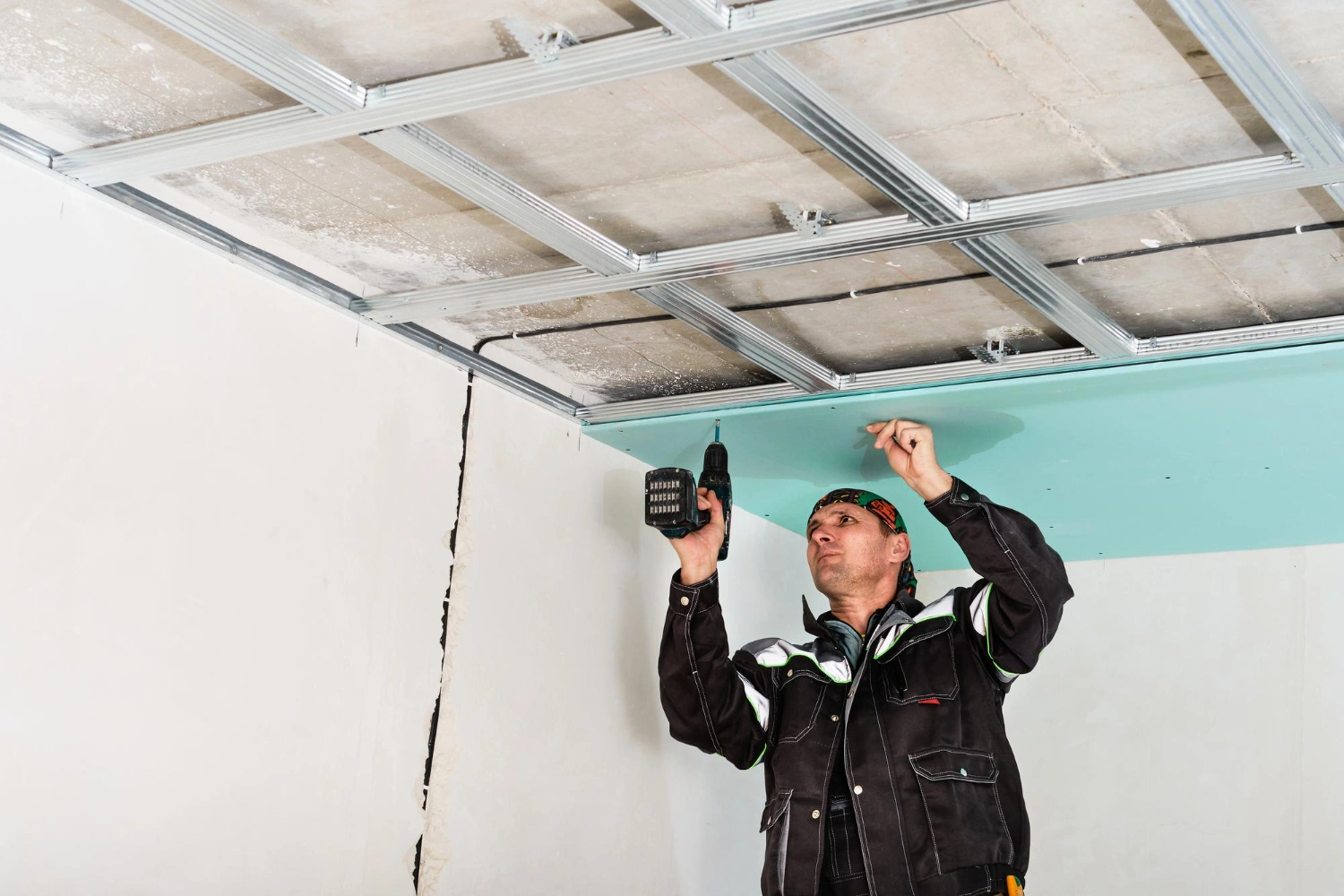
Stretch Ceiling or Kenaf
Conclusion
The debate over Stretch Ceiling or Kenaf is a perfect example of how innovation challenges tradition in the world of interior design. There is no single right answer, as the ideal choice is deeply personal and project-specific. Kenaf (drywall) remains the reliable, cost-effective, and versatile workhorse of the construction industry. It offers a classic finish that can be adapted to countless styles and is the undisputed king of budget-conscious projects.
On the other hand, the stretch ceiling represents the future. It offers unparalleled aesthetic possibilities, superior durability, minimal maintenance, and unique lighting capabilities that Kenaf simply cannot match. Its performance in humid environments makes it an essential consideration for specific applications. While its initial cost is higher, its long-term value and flawless finish provide a compelling return on investment.
Ultimately, the decision of Stretch Ceiling or Kenaf rests on a careful evaluation of your priorities. If your primary concerns are initial budget and traditional aesthetics, Kenaf is an excellent choice. If you prioritize modern design, long-term durability, low maintenance, and a truly unique “wow” factor, a stretch ceiling is likely the superior option. By understanding the distinct advantages and disadvantages of each, you can move forward confidently, knowing you have made the best possible choice for your fifth wall. The final resolution to your personal Stretch Ceiling or Kenaf deliberation will shape your space for years to come.
Frequently Asked Questions About Stretch Ceiling or Kenaf
- 1. Is a stretch ceiling significantly more expensive than Kenaf?
- Yes, initially. The upfront cost for a stretch ceiling, including material and specialized labor, is typically higher than a complete Kenaf installation (including framing, boarding, finishing, and painting). However, the long-term cost of ownership can be lower for a stretch ceiling, as it requires no painting and is highly resistant to damage that would necessitate costly repairs for a Kenaf ceiling. So, when considering the budget for Stretch Ceiling or Kenaf, you must weigh short-term expense against long-term value.
- 2. Can I install a Stretch Ceiling or Kenaf myself?
- Kenaf installation is a popular DIY project, though achieving a professional, smooth finish (especially on the seams) requires considerable skill and patience. Many homeowners handle parts of the job themselves. Stretch ceiling installation, however, is not a DIY-friendly task. It requires special tools, including a heat gun, and specific training to properly stretch and fit the membrane without damage. It’s not as straightforward as pasting panels on the wall. For this reason, it’s almost always installed by certified professionals. The Stretch Ceiling or Kenaf choice often hinges on your willingness to hire specialized labor.
- 3. How long does a typical installation take for each?
- This is a major differentiator in the Stretch Ceiling or Kenaf comparison. A standard-sized room can have a stretch ceiling installed in a single day, with no dust or mess. A Kenaf ceiling installation is a multi-day process involving framing, boarding, multiple stages of mudding and drying, sanding (which creates a lot of dust), priming, and painting, often taking up to a week from start to finish.
- 4. What happens if a stretch ceiling is accidentally punctured?
- While durable, a stretch ceiling can be punctured by a sharp object. Small punctures are often easily and almost invisibly repaired by a technician using a special adhesive patch on the reverse side. If the tear is near the edge, the ceiling might be able to be re-stretched. This is a different repair process than for Kenaf, which would require patching with compound, sanding, and repainting the entire ceiling to blend the repair. The repairability is a key point in the Stretch Ceiling or Kenaf discussion. It’s also worth noting that neither of these materials is as tough as wall coverings like Marble Sheet or Ceramic, so care should be taken with sharp objects near the ceiling.
- 5. Can you change the color of a stretch ceiling like you can with Kenaf?
- No, a stretch ceiling cannot be painted. Its color is integral to the PVC material itself. If you wish to change the color, the entire membrane must be replaced (though the existing track system can be reused). This is a significant advantage for Kenaf, which can be repainted any color, anytime. If you are someone who likes to frequently update your interior color schemes, the flexibility of Kenaf might make it the better choice in your personal Stretch Ceiling or Kenaf decision. When planning a full room remodel, wall treatments that complement a modern ceiling, like thermowall, are growing in popularity. For more traditional suspended ceilings, many still research options such as .


